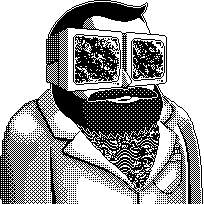

I’m a conversational AI expert and product leader who’s spent over 25 years figuring out how to make artificial intelligence actually useful for real organizations.
As Toilville’s founder and CEO, I help businesses become “multi-modal conversational powerhouses”—which is a fancy way of saying I help them use AI without losing valuable institutional knowledge or disregard human expertise.
My entire adult life, I’ve built communities around emerging technologies, from organizing international electronic music festivals to creating the conversational AI industry’s first dedicated conference. My approach has always been the same: take something complex, make it accessible, and bring people together around it.
My strongest belief is simple: The best systems amplify human excellence rather than replace it. Whether I’m helping a Fortune 500 company implement conversational equity or securing art funding, the goal is always to make powerful tools accessible to the people who can use them best.
Snatching Progress from the Fumes of Innovation
This philosophy started early—back in 1996, I was in the inaugural class of the Chicago Public Library’s Cyber Navigator program, teaching communities how to navigate this weird new thing called “the internet.” That summer program was my first taste of what would become a career-long obsession: taking emerging technologies that intimidate people and making them approachable. From dial-up modems to AI chatbots, the challenge is always the same—how do you bridge the gap between what’s possible and what people actually need?
I’ve always been fascinated by strange electronic music. In the early 2000s, I simultaneously dove into the chiptune movement—making dance music with Game Boys and vintage video game hardware—and began working with early-stage startups. These worlds cross-pollinated constantly: I performed internationally, collaborated with artists like Jeremy Kolosine and Brady Leo, and helped organize the HEXAWE chiptune collective. Same principle, different contexts: take something esoteric and show people why it matters.
Innovation happens at intersections. As editor of true chip till death, I analyzed emerging electronic music movements while working with startups exploring new technologies. When publications like UGO asked for expert commentary, I learned to articulate cultural significance in accessible terms—skills that proved invaluable across both music and tech.
Event organizing taught me community building at scale. From the Pulsewave series in NYC to helping establish Blip Festival as one of the world’s most important electronic music events, I consistently created platforms where emerging artists and technologies could find their audience. (Yes, I made it into the New York Times—though they described my “scraggly beard” instead of my insights into directional audio advertising. Priorities, people.)
The Real Work: Building AI That Actually Works
Here’s what most people get wrong about AI implementation: they think the technology is the hard part. It’s not. The hard part is understanding how humans actually work, what they need, and how to design systems that make them better at their jobs instead of replacing them.
At Botkit, I was Product Manager for the open-source chatbot framework that attracted over 360,000 developers worldwide. We launched alongside the Slack API and for many years, Botkit was the best way to make a chatbot for work. We didn’t just build tools—we built a community. At Howdy (XOXCO), the company behind Botkit, I led product strategy for multiple pioneering solutions, including the Howdy chatbot—one of the first hits in the Slack App Store when it was new—and Botkit Studio IDE. During this time, I co-founded the Talkabot Conference, the industry’s first dedicated conversational AI event, and conducted the Talkabot Talks series, featuring conversations with executives from across the conversational AI industry. When Microsoft acquired us, our work became the foundation of the Microsoft Bot Framework.
Between Howdy and Microsoft, I worked helping design and improve conversational AI offerings for major enterprises including Walmart, LivePerson, Chipotle, Lowe’s, and more. This consulting work deepened my understanding of enterprise AI implementation challenges and solutions. When I joined Microsoft, I rejoined my Howdy team to work on their Conversational AI teams.
At Microsoft Copilot Studio, I spearheaded generative and conversational AI solutions for enterprise environments. My design of the connection ecosystem became the foundation of Microsoft’s approach to using LLMs in business applications. I delivered critical functionality for customizing NLU models and architected the ecosystem supporting LLM-powered actions.
Philosophy: Human-Centered AI Implementation
I am committed to ethical AI implementation and human-centered design. I emphasize that “people greatly overestimate the out-of-the-box quality of what AI is capable of,” advocating for thoughtful integration with human escalation paths. My methodology prioritizes user-centric design and evidence-based decisions, ensuring AI enhances rather than replaces human capabilities.
While AI systems process information quickly, they lack moral reasoning and contextual understanding. Successful implementations keep people as ultimate decision-makers through diverse teams, transparent systems, and adaptive evaluation frameworks.
Building Toilville: Where It All Comes Together
I founded Toilville LLC in 2025 after 25 years in tech and 10 years specifically in the conversational AI industry. Today, I continue democratizing AI expertise through Toilville’s free office hours, adapting to evolving technologies while maintaining the same core principles that started in that Chicago library in 1996.
My philosophy that “it’s easier for clients to learn some AI than for experts to learn their domain expertise” drives my pragmatic approach to transformation. Through careful integration, Toilville preserves institutional wisdom while introducing new AI capabilities—the same bridge-building approach I’ve used whether teaching internet basics, organizing music festivals, or implementing enterprise AI solutions.
This approach, which you can learn more about by contacting Toilville, enables organizations to enhance their competitive edge by combining specialized knowledge with tailored AI solutions. Just as I helped people discover why Game Boy music mattered, I now help organizations discover why AI—implemented thoughtfully—can amplify their existing expertise rather than replace it.
Connect with me on LinkedIn or learn more about my work at Toilville. Explore my music releases, AI writings, and event coverage on this site.